Best Air Conditioners 2026: Top 1.5 Ton AC in India (Panasonic, LG, Samsung, Carrier)
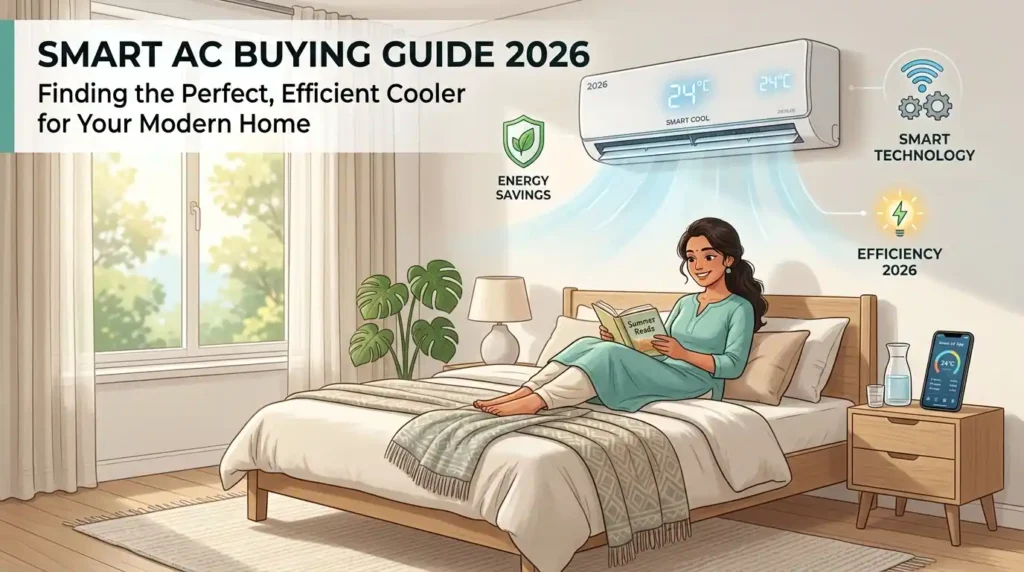
The 2026 crop of split inverter air conditioners brings small but meaningful changes: retail prices are typically 3–5% higher than 2025 models, but thanks to updated BEE energy-efficiency requirements you can expect roughly 10% lower annual running cost. If you use your AC heavily, that efficiency gain can more than justify the slightly higher upfront price.
What Changed in 2026 for Air Conditioners (New BEE Efficiency Rules Explained)
Every two years the Bureau of Energy Efficiency (BEE) refreshes the rating scale for appliances. The new 2026 rating period (January 2026 to December 2027) forces manufacturers to meet tighter efficiency targets. That means:
- Slightly higher sticker prices for the newest models.
- Lower running costs over the life of the product — typically around a 10% reduction in yearly electricity consumption for comparable models.
- Future-proofing matters: a unit that scores higher on the current rating is more likely to retain top-tier status in the next rating cycle.
Real-world example: a 2025 Panasonic 1.5 ton five-star model consumed ~760 kWh in standard testing, while the 2026 equivalent consumed ~681 kWh under the same test conditions — roughly a 10% reduction.
Understanding Cooling Capacity in Air Conditioners: What Does 1.5 Ton Really Mean?
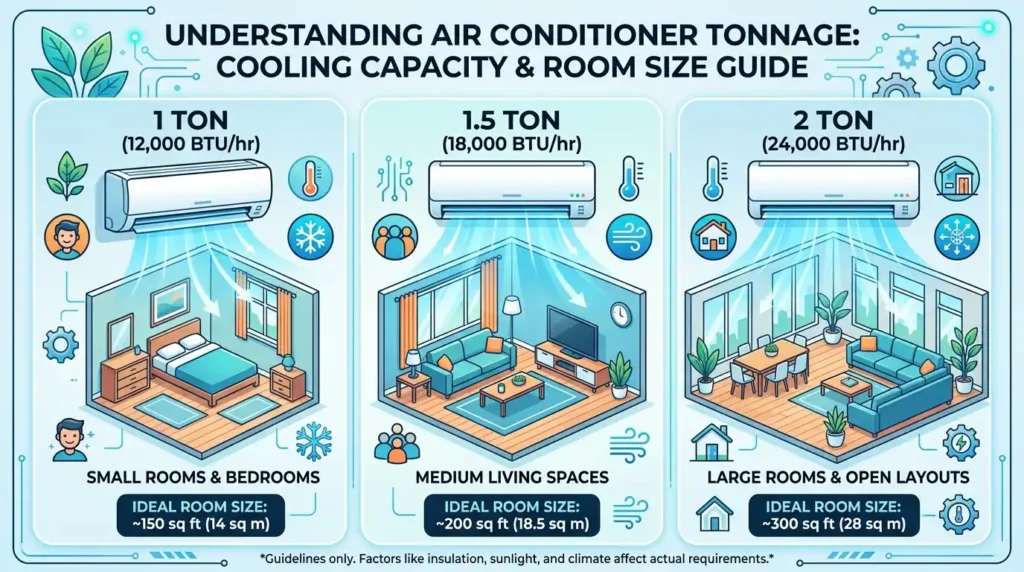
Tonnage is just a shorthand for cooling capacity. The standard industry conversion is:
1 ton ≈ 3.5 kW ≈ 12,000 BTU/hour.
So a true 1.5 ton unit should be around 5.25 kW. The BEE label lists the actual cooling capacity. If the label shows a number lower than the expected range, the marketed “1.5 ton” may actually be closer to 1.3–1.35 ton.
Example: some 2026 Samsung models show a cooling capacity of 4.75 kW — approximately 1.35 ton. That is perfectly acceptable for smaller rooms and can be cheaper, but it is not a true 1.5 ton.
Almost 1.5 Ton Air Conditioners: When a 1.3–1.35 Ton AC Is Enough
- If your room is around 200 square feet, a 1.3–1.35 ton unit can be fine — especially if the room does not receive direct sun.
- Good value when price is important and the room is modest in size or well-shaded.
- A true 1.5 ton is better for rooms near 250 square feet, rooms with strong east/west sun exposure, top-floor apartments, or very hot climates.
How to Choose the Right Tonnage for Air Conditioners Based on Room Size
Tonnage should be chosen on the basis of several factors, not just area:
- Room size: use 1 ton for small rooms, 1.5 ton for medium to large bedrooms (150–250 sq ft), and 2 ton for larger spaces.
- Sunlight: east or west-facing windows raise cooling load; choose higher tonnage.
- Floor: top floors get hotter; increase capacity.
- Occupancy: more people generate more heat; consider convertible or higher-capacity units.
- Local climate: hotter ambient temperatures require higher capacity.
Convertible inverter ACs are handy because they can flex their usable capacity (for example an 1.5 ton unit may step down to 1.0 or 0.8 ton when conditions allow), which improves comfort and efficiency when full capacity is not needed.
3-Star vs 5-Star Air Conditioners: Which Energy Rating Should You Buy?
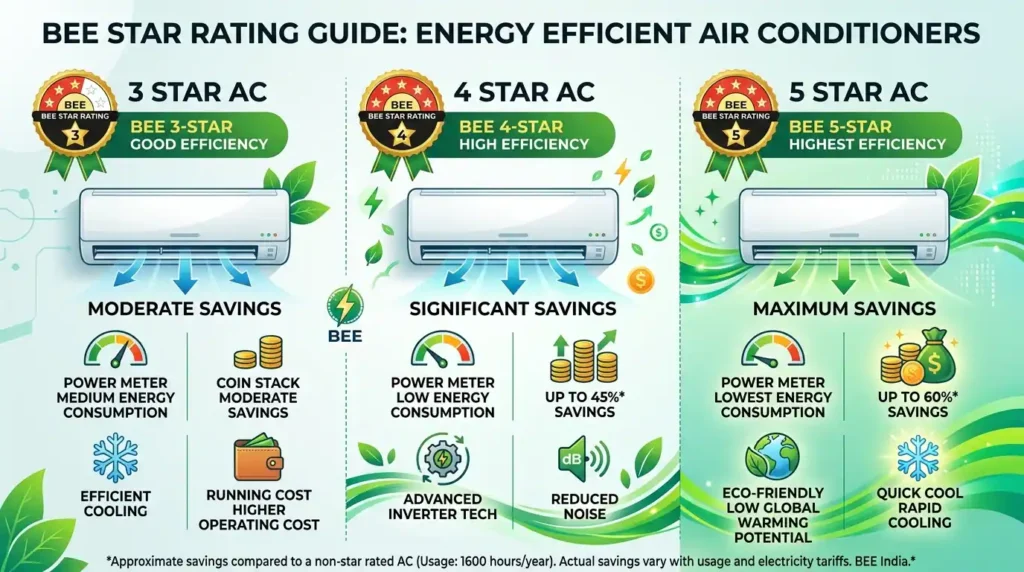
Star rating affects both upfront price and long-term electricity expenses. A few rules of thumb:
- If you use the AC only 3–4 months a year and less than ~12 hours per day during that season, a 3-star unit is often sufficient.
- If you run the AC for long durations, year-round in hot regions, or use it daily for many hours, invest in a 5-star unit to lower lifetime running costs.
Energy Efficiency Ratings in Air Conditioners: Understanding BEE Labels and Future Efficiency
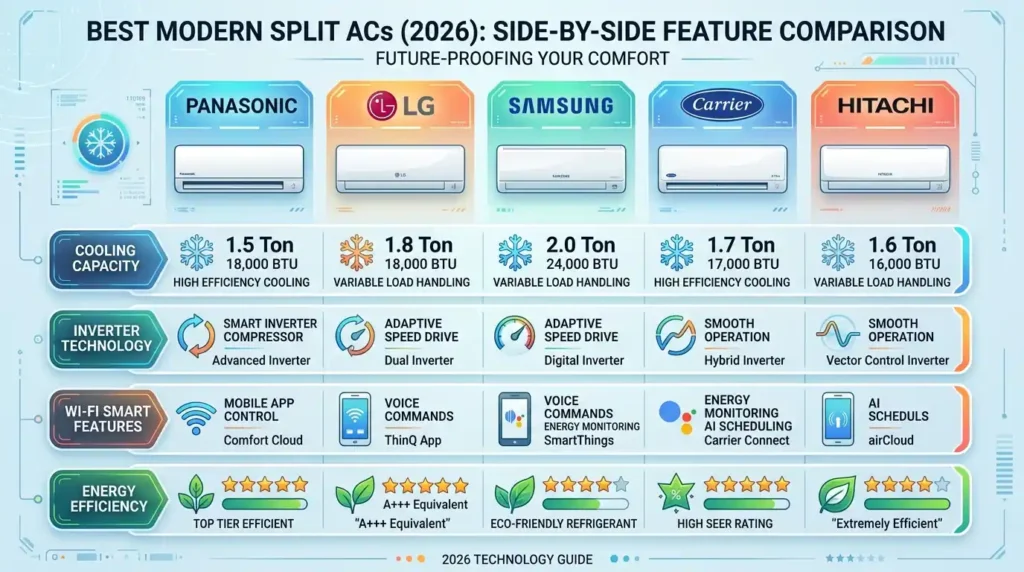
Manufacturers sometimes publish a numeric index (referred to here as ISEER) that helps compare how comfortably a model will retain its star-status across rating cycles. Higher numbers mean better energy efficiency and better chance of remaining top-rated in future BEE updates.
Examples from current models:
- Panasonic 2026 model: ISEER ≈ 5.8 — among the most efficient and likely to stay in the top tier in the next cycle.
- Carrier 2026 model: ISEER ≈ 5.6 — still high, though may drop a star in future cycles if thresholds change.
Tips to Reduce Electricity Usage with Air Conditioners
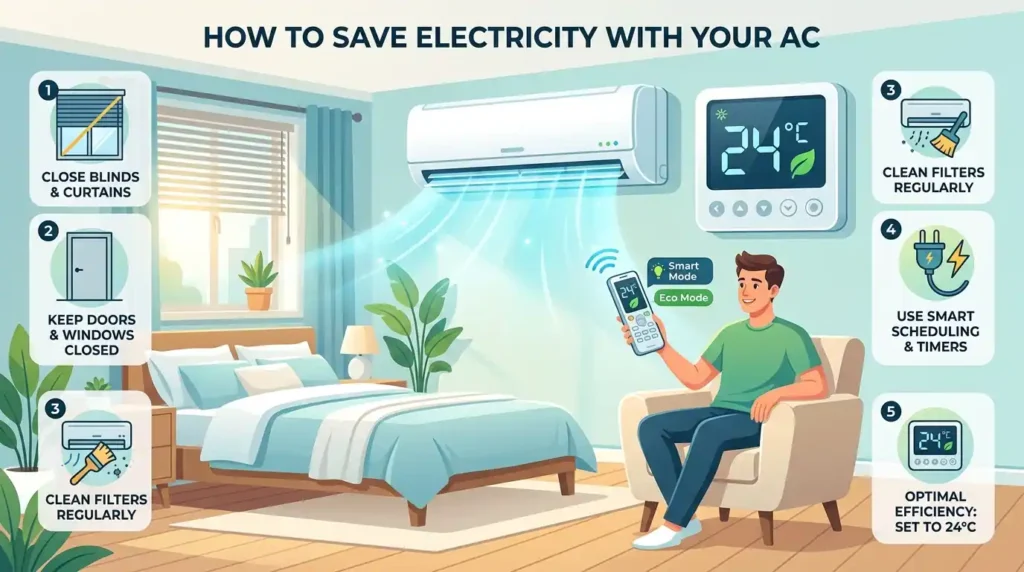
- Set the thermostat to 24°C or higher for best energy efficiency without sacrificing comfort.
- Use smart scheduling if the model has Wi-Fi/smart-home capabilities — remote control, timers, and usage monitoring help reduce waste.
- Do not rely on AC filters as sole air purification. Most AC filters are PM2.5-capable but an air purifier (or external HEPA retrofit) is best for true purification.
- Stabilizer-free operation: most modern split ACs work without an external stabilizer if mains voltage is reasonably stable (approx 110–285 V). In areas with frequent voltage fluctuations, use a stabilizer to protect the PCB and compressor.
Installation, Warranty and After-Sales Service for Air Conditioners
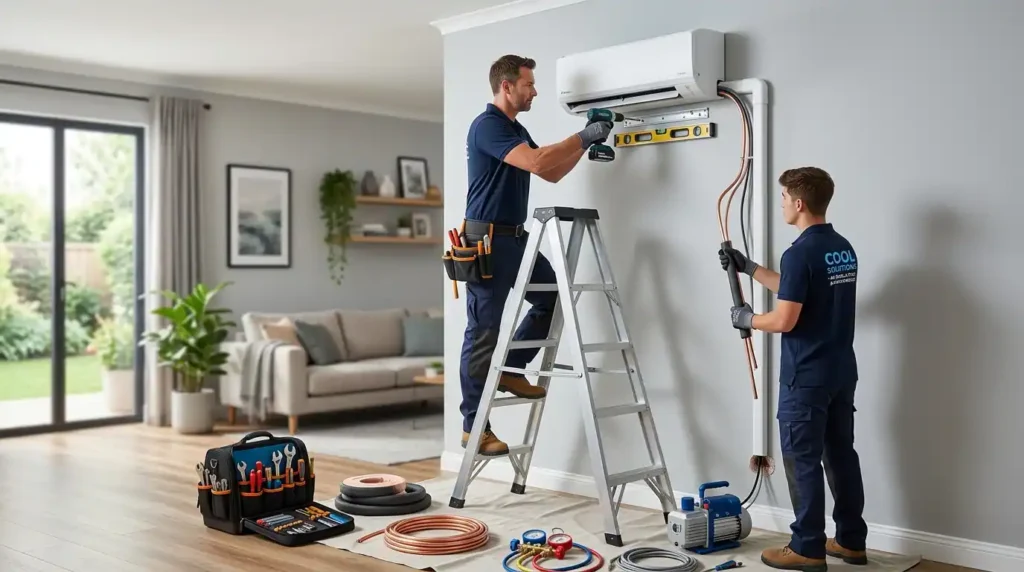
- Installation cost: expect to pay roughly ₹700–1,500 to the installer — factor this into your budget.
- Warranty: standard warranty is typically 1 year on the product with 10 years on the inverter compressor. Some brands offer extended product warranty — for example, a few models include 5 years on the product and extra warranty on the PCB.
- Service network: tier-1 cities tend to have better brand service. Budget brands often outsource service in smaller cities, which can cause installation and service delays.
Important Features to Consider When Buying Air Conditioners (and Which Ones Are Overhyped)
- Smart home and Wi-Fi: useful for scheduling and remote control, but they add to price. If you want remote control and monitoring, choose models with reliable apps.
- AI marketing: many brands advertise “AI” features — in practice this usually means adaptive setpoints or energy modes; true AI capabilities are limited today.
- Auto-clean, humidity control: helpful convenience features. They are not a substitute for regular maintenance or professional servicing.
Best Air Conditioners 2026: Top 1.5 Ton and Near-1.5 Ton Models to Buy
These recommendations focus on inverter split ACs for medium to large bedrooms (roughly 150–250 sq ft). I excluded window, non-inverter, portable, and hot-and-cold units.
Best True 1.5 Ton Air Conditioners for Medium to Large Bedrooms
- Panasonic 2026 AI Wi‑Fi — 1.5 ton, 5-star
Excellent ISEER (~5.8), cooling capacity ~5.1 kW (≈1.45 ton), smart home control, PM0.1 filtration for better air quality, and an additional five-year warranty on the PCB. A very strong all-round pick for energy efficiency and features. - Daikin DQn series (2025 model)
Cooling capacity ~5.28 kW (true 1.5 ton), ISEER ~5.2 on the 2025 label, and five-year extended warranty on the PCB. Solid performer even if the 2026 model refresh is pending. - Best Budget Air Conditioners for Affordable Cooling
Some models are tuned to deliver closer to 1.6 ton and can handle ambient temperatures up to 58–60°C. These are useful in extremely hot climates or for top-floor rooms. Expect them to consume more power but offer stronger cooling and robust warranty packages (some offer 5 years product and 12 years compressor warranty).
Value and budget picks
- MarQ by Flipkart — budget 1.5 ton
Cooling ~5.1 kW (close to 1.5 ton) and aggressive pricing. No Wi‑Fi or advanced features and no additional PCB warranty, but good value if you want basic, dependable cooling.
Almost 1.5 ton (1.3–1.35 ton) recommendations
- Samsung AI Wind-Free 2026
Cooling capacity ~4.75 kW (≈1.35 ton). Excellent warranty (5 years product, 10 years on inverter compressor), Wi‑Fi control, AI energy mode, and an ISEER close to high-efficiency range. Good option for 180–210 sq ft rooms or well-shaded spaces. - Carrier 2026 convertible models
Convertible 6-in-1 units that let you manually control the capacity conversion. Includes an insta-cool mode for rapid drop in temperature. Strong service in tier-1 cities; in other cities Carrier may use third-party networks.
Quick buying checklist
- Confirm the actual cooling capacity (kW) on the BEE label, not just the marketed tonnage.
- Choose a true 1.5 ton for rooms near 250 sq ft, top floors, or sun-exposed rooms. For ~200 sq ft rooms an almost 1.5 ton can save money.
- Decide 3-star vs 5-star based on seasonal usage hours: heavy users should prefer 5-star.
- Check the model’s ISEER/efficiency index and pick a higher number to stay future-proof.
- Budget for installation costs (~₹700–1,500) and factor in expected service quality in your city.
- Set thermostat to 24°C or above and use scheduling to cut running cost.
- If your area has unstable mains, add a stabilizer to protect the PCB and compressor.
Choosing the right 1.5 ton AC in 2026 is about balancing upfront cost, real cooling capacity, efficiency (both current and future), and after-sales support. Pick a model whose real kW rating matches your room and use pattern, prioritize higher efficiency if you run the AC a lot, and don’t overlook installation and warranty terms.
Which AC are you leaning towards for the upcoming summer? Let me know in the comments.
Pricing, Affiliate, and Sponsorship Disclosure:
All prices are subject to change and may be higher or lower than prevailing market prices. We make no guarantees regarding price accuracy. This content may include affiliate links and/or sponsored placements, through which we may receive compensation. Such compensation does not impact pricing or product representation. Consumers are responsible for verifying final prices with the retailer. 😊 Check: Affiliate Disclosure Page. and check out another social media account: Click Here.