
3 Star vs 5 Star AC in 2026: Which Is Better for Your Home and Electricity Bills?
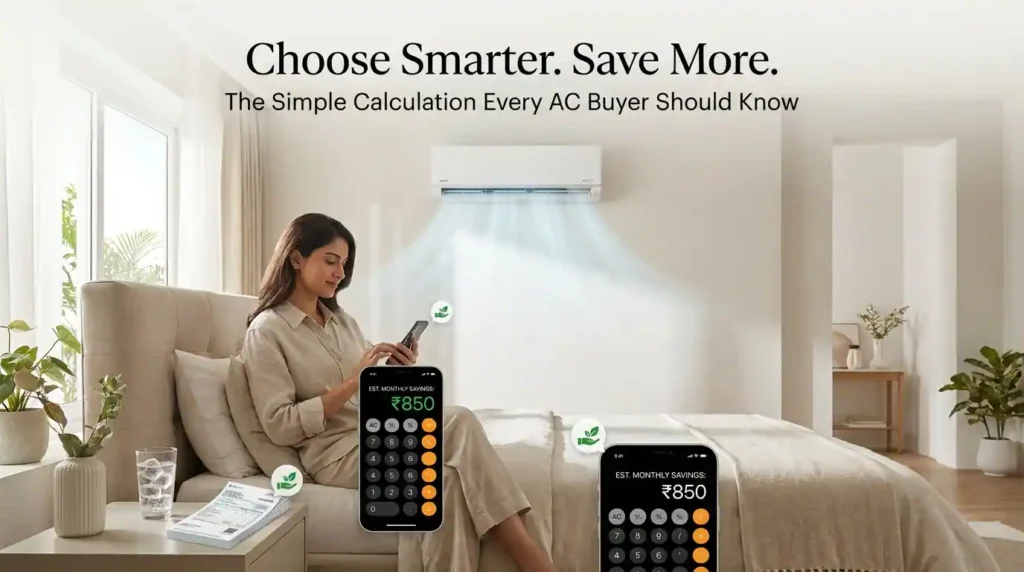
Compare 3 star Vs 5 star ACs using real electricity cost calculations, BEE ratings, and ISEER scores. Find out which AC is the smarter buy for your usage and budget in 2026.
When people shop for a new air conditioner, the biggest confusion usually comes down to one question: should you buy a 3-star AC or a 5-star AC?
The common advice is simple: spend more, buy a 5-star model, and enjoy lower electricity bills. That sounds sensible, but it is not always the right answer.
A 5-star AC is not automatically the best choice for every home. The smarter approach is to understand how star ratings work, what the BEE label actually tells you, how the 2026 rating changes affect new models, and when the extra money truly makes sense.
Why the 3 Star AC vs 5 Star AC Debate Matters

In India, AC star ratings are decided by BEE, the Bureau of Energy Efficiency. This is a government body that tests air conditioners using a standard method and assigns an efficiency score.
That score is called the ISEER, which stands for Indian Seasonal Energy Efficiency Ratio.
The basic idea is straightforward. BEE checks how much electricity an AC uses to deliver the same level of cooling. If an AC can cool efficiently while consuming less power, it gets a better score and a higher star rating.
So if you want to compare a 3-star AC and a 5-star AC properly, the first thing to understand is that the star rating is really a shorthand for energy efficiency, not cooling power alone.
How BEE Star Ratings Work for Air Conditioners
The ISEER number is printed on the BEE sticker, usually in the center area of the label. This number matters because it tells you the actual efficiency level behind the star rating.
For many buyers, this is where confusion begins. They notice the stars, but they do not check the ISEER value or the label period. That can lead to buying an older model that looks attractive on paper but is not really the latest standard.
In earlier model years, a 5-star AC could carry an ISEER value above 5. But the efficiency benchmarks have now been revised for 2026.
2026 BEE Rating Changes: What AC Buyers Need to Know
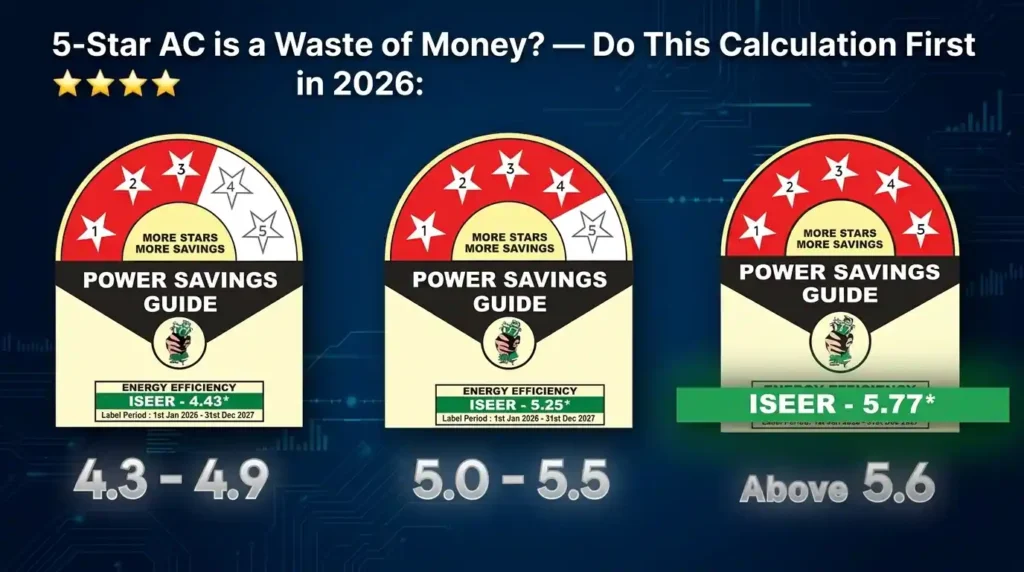
ISEER thresholds are not fixed forever. BEE reviews these ratings every two years. For 2026, the ranges have been updated.
Under the new 2026 rules:
- 3-star AC: ISEER between 4.3 and 4.9
- 4-star AC: ISEER between 5.0 and 5.5
- 5-star AC: ISEER of 5.6 or above
The big benefit of this revision is simple: newer ACs are expected to deliver better cooling using less electricity.
That also means many 2025 models are now effectively older-generation products, even if some sellers still present them as the latest models. Marketing claims can be flexible. The BEE sticker is not.
How to Identify a Genuine 2026 BEE-Rated AC
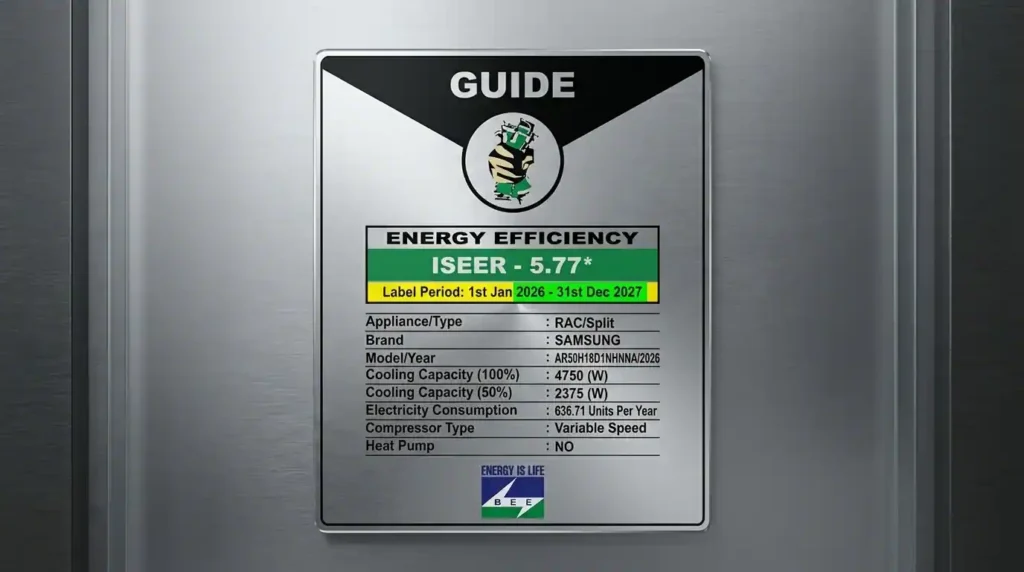
If you are buying online or offline, do not rely only on the product title or the salesperson’s pitch. Check the BEE label carefully.
Here is what to verify:
- Star rating
- ISEER number
- Label period
If the label period does not show 2026-2027, then it is not a latest 2026-rated model. This is one of the easiest ways to avoid paying new-model prices for old stock.
What to Check on the BEE Label Before Buying an AC
The BEE sticker gives you more than just a star count. If you want to choose the right split AC or inverter AC for your home, pay attention to these details as well.
Calculate Your Appliance Electricity Cost
Check the estimated daily, monthly and yearly electricity consumption of your AC, refrigerator, fan, air fryer, geyser and other appliances.
1. Annual Electricity Consumption: Estimate Your Running Costs

This is one of the most useful numbers on the sticker because it gives a rough idea of how much power the AC will consume in a year under standard conditions.
For a 1.5 ton 5-star AC, annual consumption should typically fall around 700 to 800 units.For a 2026 model, this can come down further to around 600 units. The lower this number, the lower your electricity bill is likely to be.
2. Cooling Capacity: How to Verify the Actual AC Performance
Cooling capacity tells you the actual size and output of the AC. This is what determines whether it is effectively a 1 ton, 1.5 ton, or 2 ton machine.
And this is important: not every AC sold as a 1.5 ton AC performs exactly like a full 1.5 ton unit.
To check that, look at the cooling capacity in watts on the sticker. That number gives a more accurate picture than the marketing label alone.
For a 1.5 ton category AC, a cooling capacity of above 5000 watts is a strong sign.
3 Star AC vs 5 Star AC: What’s the Real Difference?
Now to the part that really matters: is a 5-star AC worth the extra money?
The biggest difference between the two is price. In many cases, a 5-star AC costs around ₹7,000 to ₹10,000 more than a comparable 3-star model.
That is not a small difference, so the only way to decide properly is to compare that extra upfront cost with the long-term savings on electricity.
How to Calculate Whether a 5 Star AC Is Worth the Extra Cost
Here is an easy way to think about it.
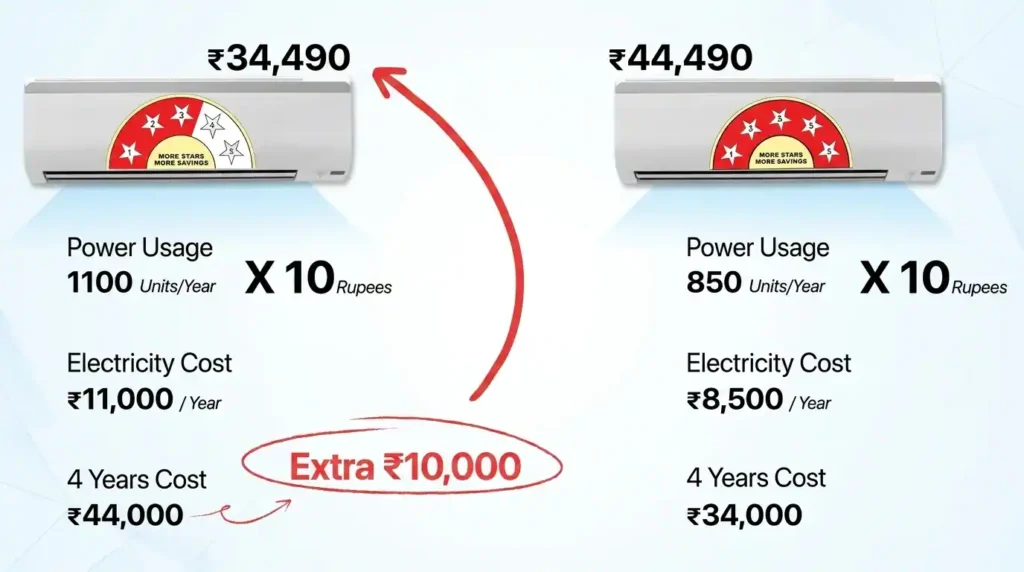
A 3-star AC may consume roughly 1,100 units per year, while a 5-star AC may use around 850 units per year.
That is a difference of about 250 units annually.
If your electricity rate is ₹10 per unit, the yearly savings from the 5-star AC would be roughly:
- 250 units × ₹10 = ₹2,500 per year
Now stretch that over 3 to 4 years:
- ₹2,500 × 4 years = about ₹10,000
That is almost the same as the typical price difference between a 3-star and a 5-star AC.
So the answer is not that a 5-star AC is useless. The real answer is this: the value depends on your usage.
When a 5 Star AC Makes Sense for Your Home
A 5-star AC is worth considering if:
- You use the AC for more than 8 hours a day
- The AC runs regularly through long summer months
- You want lower long-term running costs
- You are buying for a room where the AC will be used heavily, such as the main bedroom or living room
In these cases, the extra upfront investment can pay back over time through lower electricity bills.
When a 3 Star AC Is the Better Choice
A 3-star AC is often the better decision if:
- You use the AC for only 3 to 4 hours a day
- The room is used occasionally
- You are buying for a second bedroom or guest room
- You want to reduce initial purchase cost
In this situation, the savings from a 5-star model may take too long to recover the higher price. That makes the cheaper 3-star AC the more practical option.
3 Star vs 5 Star AC: Pros and Cons
3-star AC pros
- Lower upfront price
- Good option for moderate or occasional use
- Suitable for secondary rooms
3-star AC cons
- Higher electricity consumption
- Less cost-effective for long daily usage
- May lead to higher bills over the years
5-star AC pros
- Better energy efficiency
- Lower annual electricity bills
- Best for heavy daily use
- Latest 2026 models are even more efficient
5-star AC cons
- Higher purchase price
- Not always worth it for light usage
- Some older models may be sold as if they are current generation
How to Choose the Right AC in 2026
If you want a simple buying checklist, use this order:
- Decide based on your daily usage whether you need a 3-star or 5-star AC.
- If choosing a 5-star AC, make sure the ISEER is 5.6 or higher.
- Check the label period and confirm it is a 2026-2027 rated model.
- Compare the annual electricity consumption. Lower is better.
- Verify the cooling capacity in watts, especially if you want a true 1.5 ton AC.
Best Choice Based on Your Usage
Buy a 5-star AC if: you want the best efficiency, run the AC for long hours, and are comfortable paying more upfront to save later.
Buy a 3-star AC if: your use is limited, your budget is tighter, or the AC is going into a room that is not occupied full-time.
Final Verdict: Should You Buy a 3 Star AC or a 5 Star AC?
So, is a 5-star AC a waste of money?
No, but it can be if you buy it for the wrong usage pattern.
The smart decision is not based on stars alone. It comes from doing one simple calculation: how much extra are you paying upfront, and how much will you actually save on electricity over the years?
If your AC runs for long hours every day, a 5-star inverter AC can be a solid investment. If your use is limited, a 3-star model may give you better overall value.
Either way, do not stop at the marketing label. Check the BEE sticker, ISEER rating, label period, annual power consumption, and cooling capacity. That is where the real story is.
Pricing, Affiliate, and Sponsorship Disclosure:
All prices are subject to change and may be higher or lower than prevailing market prices. We make no guarantees regarding price accuracy. This content may include affiliate links and/or sponsored placements, through which we may receive compensation. Such compensation does not impact pricing or product representation. Consumers are responsible for verifying final prices with the retailer. 😊 Check: Affiliate Disclosure Page. and check out another social media account: Click Here.